

In this episode, Niklas Hebborn, CCO at UMH, sits down with Max Morwind, Manufacturing Sales Director Switzerland at Microsoft to explore how AI, data, and modern cloud technologies are reshaping global manufacturing. They discuss the evolution from early IoT projects to today’s AI-driven factories, why many digital initiatives stalled in the past, and what manufacturers must do to build a solid data foundation. The conversation also covers the human side of AI adoption - how HR, culture, and skill development play a decisive role - as well as the rise of agents, unified data layers, and the future of automation.
You’ll hear insights on the current maturity of industrial AI, how Microsoft Fabric is becoming the analytical heart of modern manufacturing, and why partnerships between hyperscalers, startups, and system integrators are key to unlocking real business value.
Highlights from the conversation include:
- The critical role of clean, contextualized data for any AI initiative
- How Unified Namespace concepts enable standardization across machines and sites
- Why HR and change management are as important as technology
- The rise of AI agents and their impact on white-collar and shop-floor workflows
- Microsoft Fabric’s role as the core data layer for real-time industrial analytics
- Lessons from global manufacturers on brownfield vs. greenfield digitalization
- Europe’s competitive position and how efficiency gains can reshape the region’s manufacturing future
- How partners, startups, and ISVs drive innovation on top of hyperscaler platforms
Key Takeaways
IoT Has Become a Commodity, but Data Quality Still Holds Back AI
Manufacturers have connected countless machines over the past decade, yet many projects stalled because the data was fragmented, messy, or lacked a clear business case. AI only delivers value when the underlying data is well-structured and contextualized.
Unified Data Layers Are Essential for Scalable AI
Concepts like the Unified Namespace and platforms such as Microsoft Fabric help standardize and blend data from machines, ERP, CRM, and supply chain systems- creating the foundation for real analytics, machine learning, and automation.
Organizational Change Matters as Much as Technology
HR and change management play a major role. Employees must be upskilled and shown how AI supports, not replaces, their work. Clear communication and defined future roles are essential for adoption across multiple sites.
AI Agents Will Transform Both Shop-Floor and Office Workflows
Microsoft expects billions of agents to support tasks across production, R&D, supply chain, and support functions. These digital co-workers will automate repetitive tasks and augment human decision-making.
Brownfield vs. Greenfield Creates Different Paths to Digitalization
Retrofitting older plants remains challenging due to legacy systems and protocols. Meanwhile, new facilities in Asia and the US can embed digital capabilities from day one—giving them a competitive edge unless Europe accelerates transformation.
Europe Must Leverage Efficiency and Automation to Stay Competitive
High labor and energy costs mean European manufacturers must double down on automation, AI, and data-driven optimization to remain globally competitive with the US, India, and South Korea.
Partnerships Are Critical for Success
Microsoft provides the platform, but real value is unlocked through partners—startups, ISVs, and system integrators—who bring domain expertise, connectivity layers, and vertical use cases on top of hyperscaler infrastructure.
Less Data Can Be More Valuable
Instead of streaming everything to the cloud, smart architectures prioritize only the relevant signals. Storing high-density data locally and sending anomalies for retraining reduces cost and improves model efficiency.
Data Context Comes From the People Closest to the Machines
Shop-floor experts are essential for identifying which signals matter. Involving them early ensures the right data models, better accuracy, and faster deployment of AI solutions.
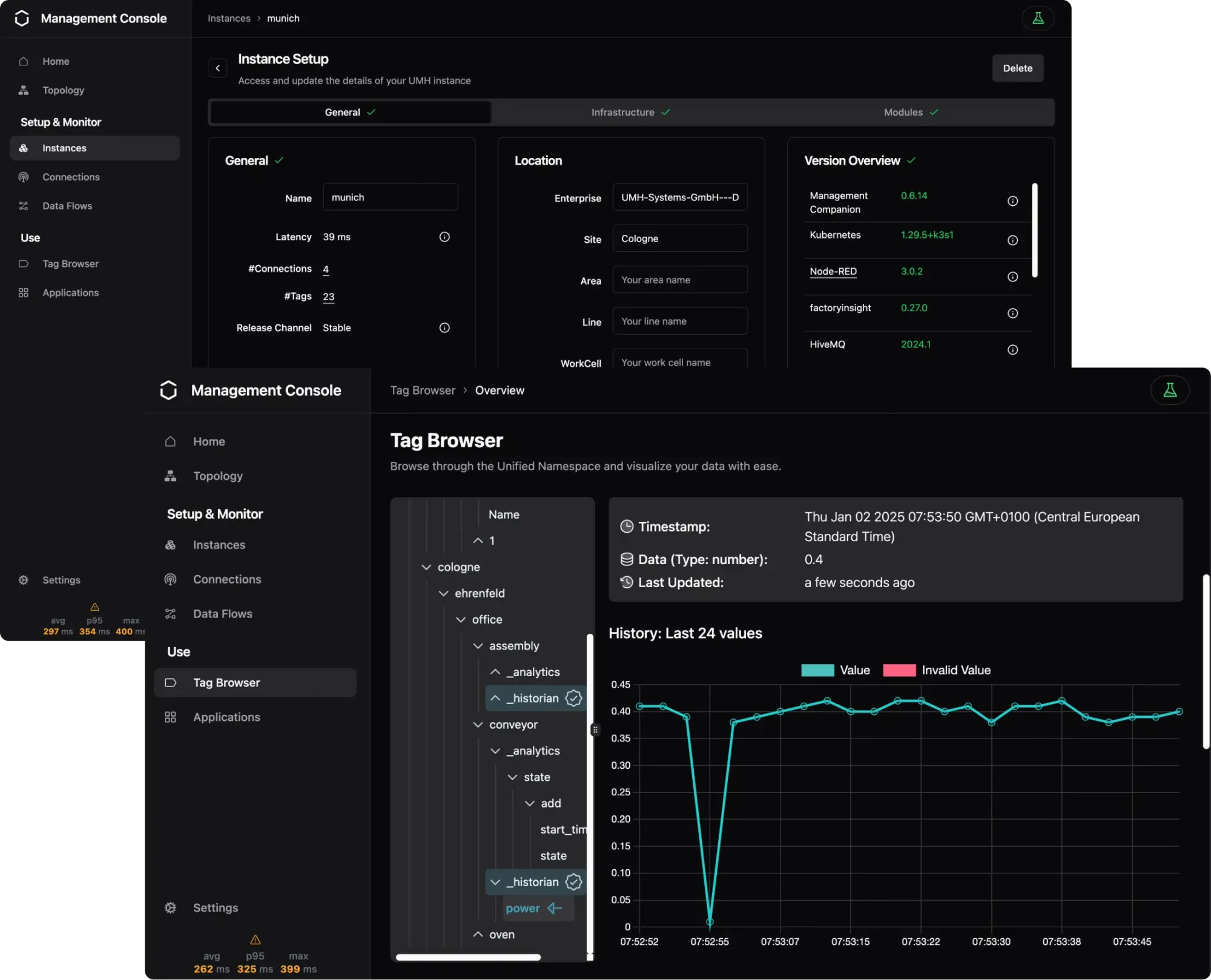
IT / OT Integration Platform for Industrial DataOps
Connect all your machines and systems with our Open-Source IT/OT Integration Platform to make all shop-floor data accessible at a single point.
Chapters
00:00 Introduction
03:35 Current State of AI and Digitalization
07:29 Organizational Challenges in AI Adoption
11:27 The Role of Unified Namespace in Data Management
15:25 The Impact of Generative AI on Manufacturing
19:10 MS Fabrics: The Heart of Cloud Strategy
22:21 Use Cases of AI in Manufacturing
24:16 Global Perspectives on Manufacturing Maturity
28:15 The Future of Automation and Human Roles
30:28 The Importance of Partnerships in AI Transformation


