
Latest — page 2

Featured
We built what we wished existed. €5M to double down.
Beyond compressed air and electricity, data should be the third resource every factory runs on. Today, it's blocked. We raised €5M to change that.

Featured
United Manufacturing Hub Achieves ISO 27001 Certification
United Manufacturing Hub (UMH) has achieved ISO/IEC 27001:2022 certification.

Featured
AI In Manufacturing Is A Dumpster Fire
Discover why most factory-floor LLM demos break apart in production - and how a generate → freeze → test workflow instead turns "AI" into reliable, audit-grade pipelines instead of costly surprises.

Featured
Industrial IoT Platforms vs. The Unified Namespace (UNS)
A single IoT platform can tackle specific use cases but struggles with large-scale data. A Unified Namespace excels at flexible distribution yet needs extra tools. The key is striking the right balance and leveraging each where it shines

Featured
What is MQTT? Why Most MQTT Explanations Suck—and Our Attempt to Fix Them
Frustrated by confusing MQTT explanations? This guide clarifies MQTT’s essentials, shows why it’s ideal for IoT telemetry, and reveals its drawbacks for manufacturing—plus how to integrate MQTT with data-center-grade solutions for end-to-end reliability.

Featured
Node-RED meets Benthos!
Yes, we’ve made it possible to bring Node-RED-style simplicity into Benthos pipelines, enabling your chosen LLM to handle tedious manufacturing connectivity and contextualization tasks—whether you’re prototyping or managing production-grade data flows.

Featured
AWS and Azure are At Least 4x–10x More Expensive Than Hetzner
Why We Recommend Hetzner to Try Out the UMH: it is at least 4x–10x less expensive than AWS and Azure for similar VM instances.
Featured
Why Most Manufacturing Software Sucks — and What We Do Differently at UMH
At UMH, we’re building an integrated and user-centric solution for industrial IoT. In this article, we explore the shortcomings of typical manufacturing software and share how our unique approach addresses these challenges.
Featured
Cloud-Native Technologies on the Edge in Manufacturing
Read this article to know how modern "cloud-native" technologies such as Kubernetes, Grafana, and TimescaleDB can and must be combined with the traditional automation pyramid.
Featured
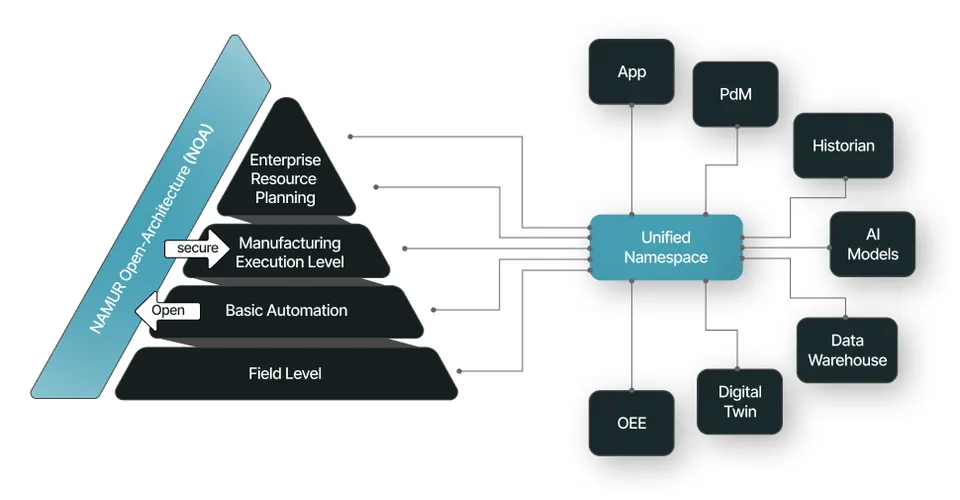
NAMUR Open Architecture versus Unified Namespace: Two sides of the same coin?
We strongly believe that NAMUR Open Architecture (NOA) and Unified Namespace (UNS) represent two sides of the same coin in industrial automation. Here's why!

Featured
Opinion: OPC UA is the Peak of All That Is Wrong in Manufacturing
Thank you for your attention! Now, let's discuss a topic that is close to our hearts. We want to talk about OPC Unified Architecture, or OPC UA for short. We are not in competition with OPC UA. Rather, we are (frustrated) users of OPC UA, and what follows is our personal opinion.

Featured
Freigeist backs United Manufacturing Hub
Press release for United Manufacturing Hub seed round funding with Freigeist.

Featured
The Unified Namespace as the strongest architectural proposal for Industry 4.0
Discover the Unified Namespace in IT/OT convergence with this four-lesson course. Gain essential insights to navigate the hype and make informed decisions about UNS in Industry 4.0.

Featured
Chapter 3: The Foundations of the Unified Namespace in Information Technology
This chapter focuses on the fact that the concept of the Unified Namespace is an application of battle-tested IT-architecture that already enjoys widespread adoption in more advanced sectors (e.g., banking, startups, etc.).

Featured
Chapter 2: The Rise of the Unified Namespace
Learn more about the inventor of the word "Unified Namespace" and learn about its components and definitions.

Featured
Chapter 1: The Foundations of the Unified Namespace in Operational Technology
Dive into Chapter 1 of our course on the Unified Namespace. Understand the Automation Pyramid and its challenges.
Featured
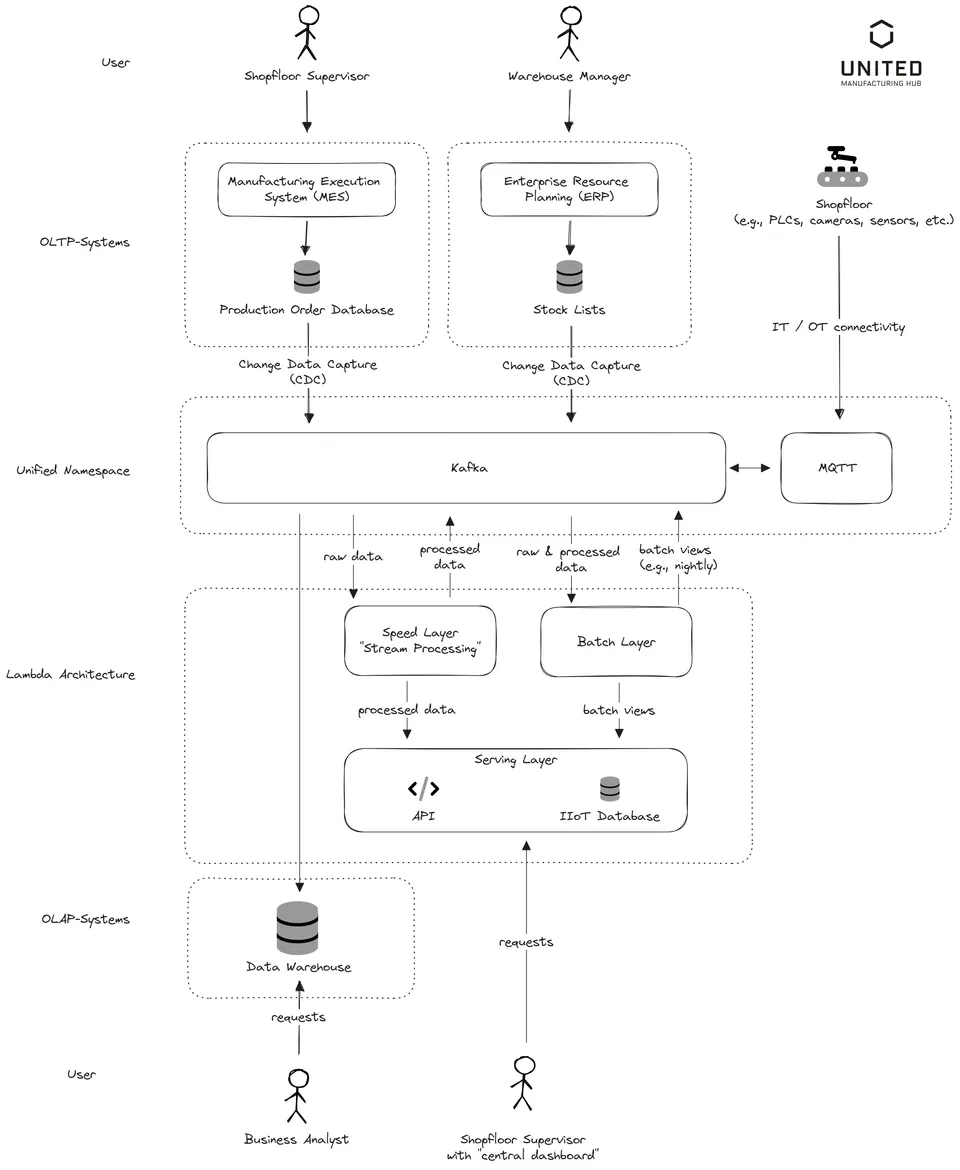
Integrating the Unified Namespace into Your Enterprise Architecture: An Architect's Guide
The article delves into the different data requirements of frontline workers and business analysts, the roles of OLTP and OLAP databases, and the concept of Lambda Architecture for managing large volumes of real-time and historical data.

Featured
The High Compression Deception: A Reality Check on Historians vs Open-Source Databases
Explore the pros and cons of Historians versus open-source databases in sectors like oil&gas, pharmaceutical, and chemicals. This article discusses compression algorithms, storage costs, and modern compatibility.

Featured
Why designing your own IT / OT infrastructure is harder than you might think - 10 Pitfalls and how to avoid them
Navigating the design of IT/OT infrastructure without MQTT, Kafka, and Kubernetes? We embarked on that journey too and confronted numerous challenges. Our hope is that our experiences can provide you with insights towards better solutions.

Featured
Flatcar as the operating system of the Industrial IoT
Discover why we chose Flatcar as the operating system for the Industrial IoT. We want to guide you through our thought process - from our requirements to selecting the operating system.
Featured
Comparing MQTT Brokers for the Industrial IoT
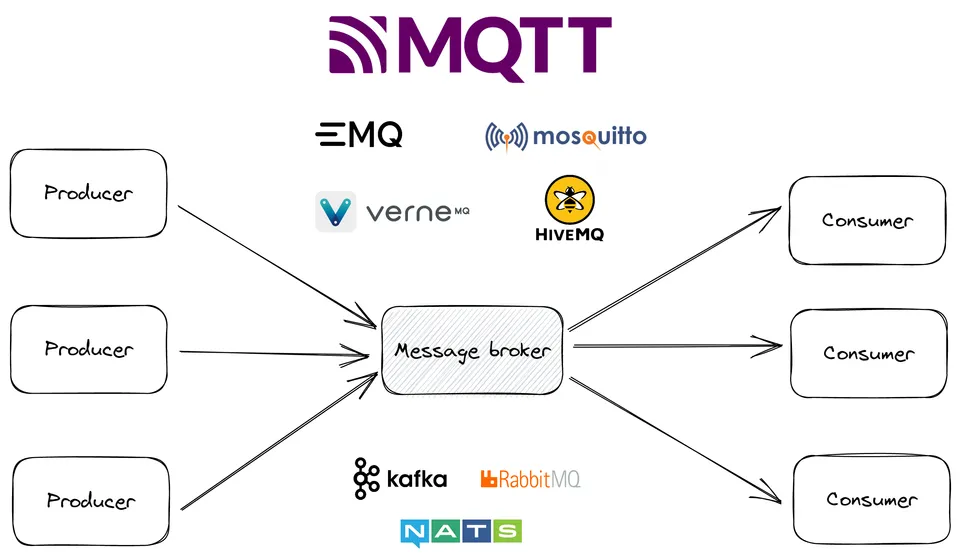
Are you looking for the best MQTT broker for your IoT or IIoT project? In this technical comparison, we evaluate four popular options: Eclipse Mosquitto, VerneMQ, EMQx, and HiveMQ. We consider factors such as reliability, scalability, and maintainability to help you make an informed decision.

Featured
Historians vs Open-Source databases - which is better?
OSIsoft PI, Canary, InfluxDB, TimescaleDB and Ignition - the number of tools you can use to store your data from your machinery is endless. This article provides an overview of historians and open source time series databases.

Featured
Tools & Techniques for scalable data processing in Industrial IoT
The industry is shifting from use-cases to being technology driven. We provide a look behind the United Manufacturing Hub and into our experiences for tools & techniques for data processing.

Featured
Node-RED in Industrial IoT: a growing standard
How an open-source tool is establishing itself in a highly competitive environment against billion dollar companies.

Featured
Why we chose TimescaleDB over InfluxDB
TimescaleDB is better suited for the Industrial IoT than InfluxDB, because it is stable, mature and failure resistant, it uses the very common SQL as a query language and you need a relational database for manufacturing anyway